Custom vs Semi-Custom vs Stock Cabinets: What Is the Difference?
Cabinets are generally classified as stock, semi-custom, or custom. These terms describe how the cabinets are designed, manufactured, and adapted to a room. They also affect the available dimensions, materials, finishes, storage options, installation requirements, and project timeline.
When comparing custom vs semi custom cabinets, it is important to look beyond appearance. Two cabinet systems may use similar door styles or finishes while offering very different levels of flexibility. Understanding these differences can help you select cabinetry that suits the room and the way it will be used.
What Are Stock Cabinets?
Stock cabinets are manufactured in predetermined widths, heights, and depths. They are supplied as part of an established product range, with a limited selection of door styles, finishes, hardware, and internal storage options.
Because the dimensions are fixed, the room must be planned around the available cabinet sizes. Fillers, trim panels, or unused spaces may be required where the cabinets do not align precisely with walls, ceilings, appliances, or architectural features.
Stock cabinets may suit straightforward rooms where standard cabinet dimensions work with the proposed layout. They can also be appropriate when only basic storage and a limited range of finishes are required.
What Are Semi-Custom Cabinets?
Semi-custom cabinets are based on a manufacturer’s standard cabinet system but provide more options than a stock range. Depending on the manufacturer, clients may be able to select from additional widths, depths, door profiles, finishes, accessories, and internal fittings.
Some dimensions may be adjusted, but the cabinetry must still remain within the manufacturer’s available specifications. The range of modifications and finishes can differ considerably between suppliers, so the available options should be confirmed before the layout is finalised.
Semi-custom cabinetry may suit rooms that need more flexibility than stock cabinets provide but can still be planned around a standard manufacturing system.
What Are Custom Cabinets?
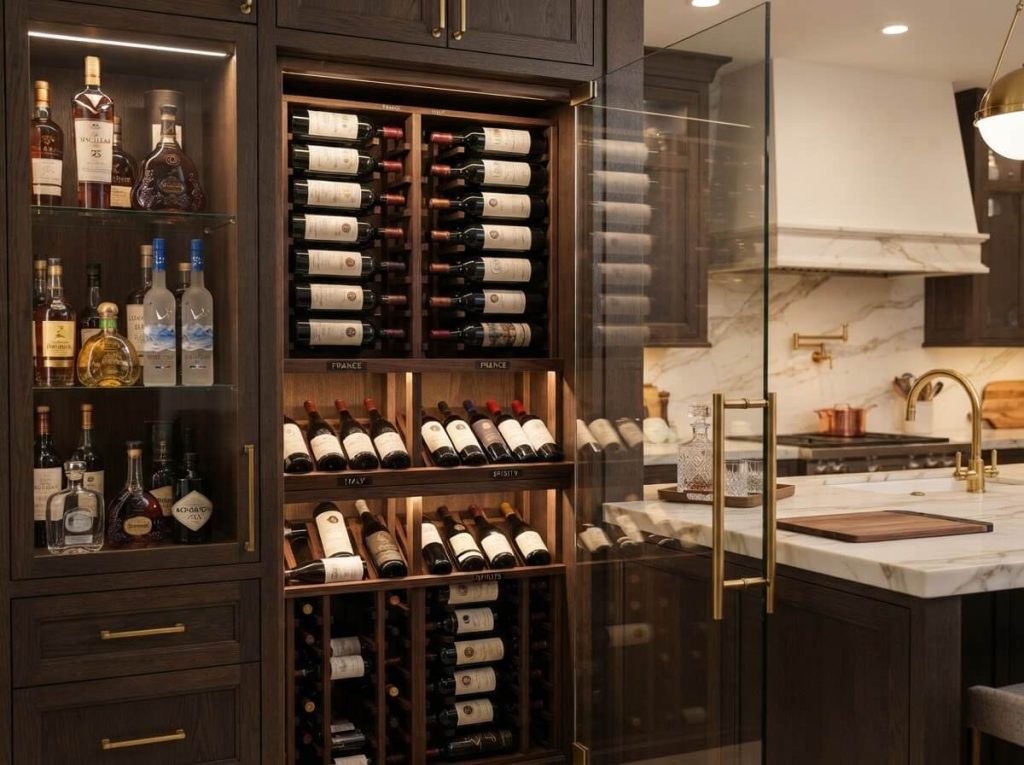
Custom cabinets are designed and fabricated for a particular room. Their dimensions, internal arrangement, materials, door styles, finishes, and hardware are developed around the measurements and requirements of the project.
The layout can account for walls, ceilings, windows, doors, appliances, plumbing fixtures, electrical points, and other existing features. Cabinet depths and heights can also be adjusted where standard dimensions would leave unused space or interfere with surrounding elements.
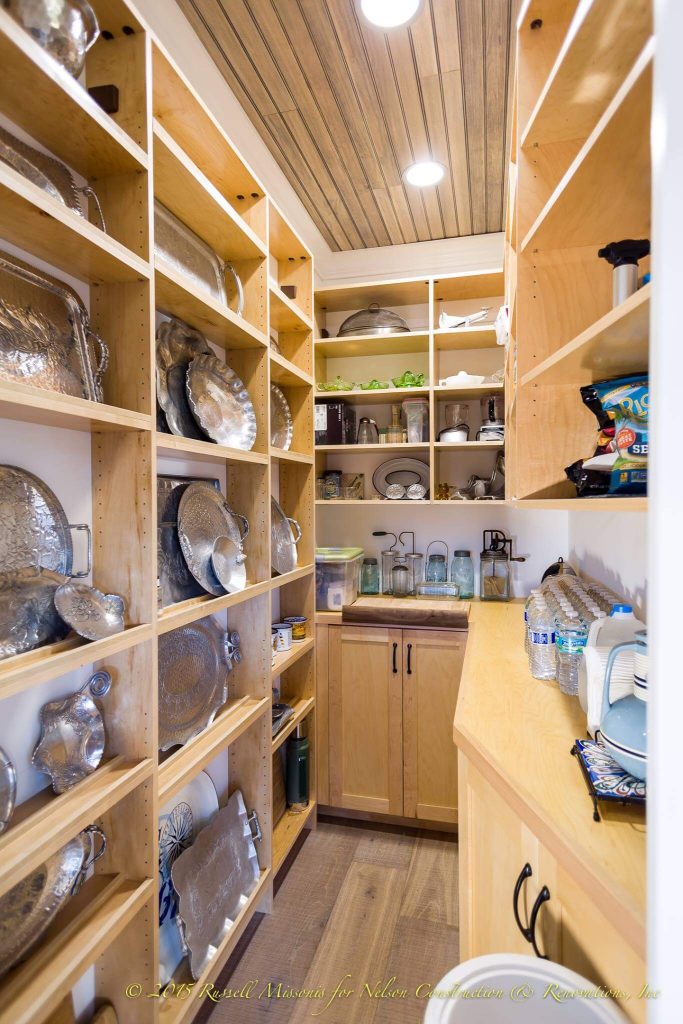
Internal storage can be planned around specific items rather than selected from a fixed catalogue. This may include drawers, adjustable shelves, appliance storage, waste compartments, filing systems, media equipment sections, or display areas.
Our custom cabinetry services include design, measurements, fabrication, and installation for different areas of the property.
Custom vs Semi Custom Cabinets: Key Differences
Cabinet Dimensions and Fit
Custom cabinetry allows the width, height, and depth of each cabinet to be planned around the room. This makes it possible to use areas that standard cabinet sizes may not accommodate.
Semi-custom cabinets provide some dimensional flexibility, while stock cabinets are limited to predetermined sizes. The suitability of either option depends on how closely those sizes correspond with the room.
Storage and Internal Layout
Stock cabinetry usually offers a defined range of shelves, drawers, and accessories. Semi-custom systems may provide additional organisers or modified internal arrangements.
With custom cabinets, the internal layout can be developed around the items that need to be stored. This is useful when the project involves specialist equipment, unusual storage requirements, or a combination of open and enclosed sections.
Materials and Finishes
Stock and semi-custom cabinet materials are selected from the manufacturer’s available range. Semi-custom ranges generally provide more choices, but the final selection remains limited to that particular system.
Custom cabinetry allows the construction materials, wood species, door profiles, paint colours, stains, clear finishes, hardware, and other visible details to be selected for the project. These choices can be coordinated with nearby flooring, countertops, walls, furniture, and architectural finishes.
Project Coordination
Cabinetry frequently needs to be coordinated with appliances, countertops, plumbing, lighting, electrical connections, flooring, fireplaces, or media equipment.
Custom cabinets can be planned around these elements from the design stage. Stock and semi-custom cabinets may require the surrounding layout to be adjusted to accommodate their available dimensions.
Production and Installation
Stock cabinets are manufactured before they are selected and may therefore have a shorter ordering process. Semi-custom cabinets require selected modifications before production.
Custom cabinets involve measurements, design development, material selection, design approval, fabrication, and installation. The timeline depends on the project scope, selected materials, finish, and any work that must be coordinated with other trades.
Cost Considerations
Stock, semi-custom, and custom cabinetry are priced differently because they involve different levels of design, material selection, modification, and fabrication.
Stock cabinets generally involve fewer design and manufacturing changes. Semi-custom cabinetry adds options within an existing system. Custom cabinetry includes project-specific design and fabrication, so the cost depends on the cabinet dimensions, construction, materials, finish, hardware, storage features, and installation requirements.
When comparing estimates, check what each quotation includes. Measurements, design work, delivery, installation, hardware, finishing, and related site work may not be included in the same way by every supplier.
Which Type of Cabinetry Suits Your Project?
Stock cabinets may be suitable when the room accommodates standard dimensions and the available finishes meet the project requirements.
Semi-custom cabinetry may be appropriate when additional sizes, styles, or storage features are needed but the room can still work with a manufacturer’s standard cabinet system.
Custom cabinetry may be considered when the room has irregular dimensions, the cabinets must align with specific architectural features, or the project requires a particular combination of storage, materials, and finishes. It can also be used to coordinate cabinetry across kitchens, bathrooms, living rooms, home offices, and other areas of a property.
The appropriate option depends on the room, required storage, preferred materials, project timeline, and level of design flexibility needed.
Questions to Ask Before Selecting Cabinets
Before choosing between stock, semi-custom, and custom cabinets, consider the following:
- Do standard cabinet dimensions suit the available space?
- Will fillers or unused gaps be required?
- Do the cabinets need to align with appliances or architectural features?
- What items need to be stored?
- Are specific materials, door styles, or finishes required?
- Does the quotation include measurements, design, delivery, and installation?
- Can replacement components or matching finishes be obtained later?
- What must be coordinated with countertops, plumbing, electrical work, or flooring?
Reviewing these points makes it easier to compare the available options based on the complete project rather than appearance alone.
Discuss Your Cabinetry Requirements
If you are comparing custom vs semi custom cabinets for a project in Tampa Bay, schedule a consultation to discuss the room, storage requirements, materials, finishes, and installation needs. Our team can review the space and explain how a custom cabinet design would be developed for the project.